
Eggs are a staple on many people’s weekly grocery list. In the last year amid skyrocketing egg prices and multiple recalls, shoppers have been left weary on what to buy or whether they can even secure a carton.
Now, eggs are under fire for a different reason. A social media scandal has the company Vital Farms in hot water. It all started when Instagram user @zephzoid broke the story in his self-titled “exposé” video, revealing that a study found some controversial findings about Vital Farms eggs. People on social media swiftly went into a frenzy, with some expressing disappointment and encouraging others to boycott the company.
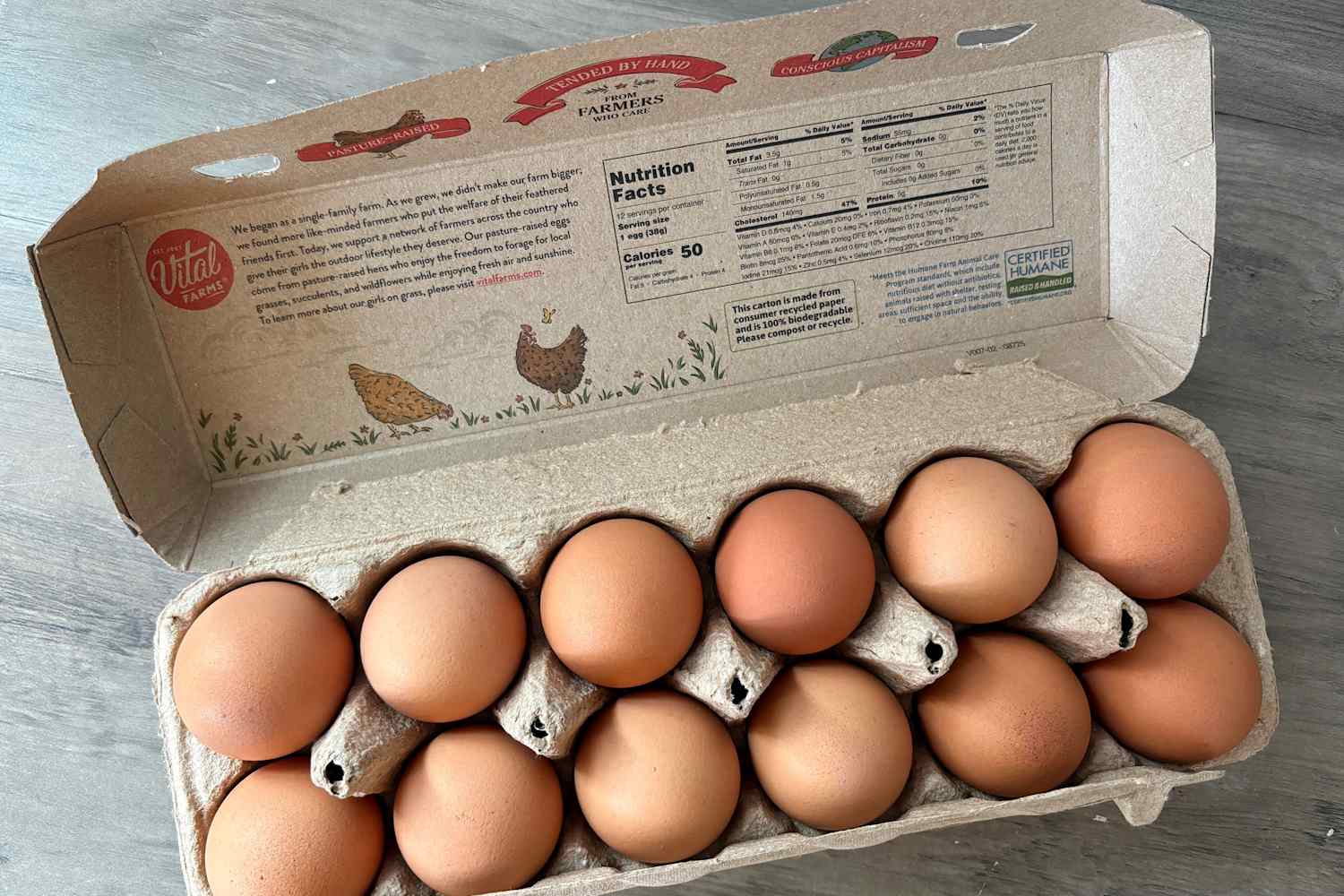
I will admit that this video piqued my interest. As someone who tries to be an ethical, responsible consumer, I always try to buy pasture-raised eggs, which often means Vital Farms. (In fact, I had some in my fridge when the news broke!) I can’t lie; the packaging is cute, but I also assumed the claims listed on its packaging — such as tended by hand, happy hens, conscious capitalism, made with fresh air and sunshine, and 108 square feet per hen — were true. Vital Farms is also a Certified Humane and Certified B corporation. So what’s all the fuss about? I did some digging and reached out to the company to get to the bottom of it.
What’s the Controversy About Vital Farms Eggs?
In the viral video, @zephzoid shared the findings of a study conducted by Nourish Food Club in collaboration with Michigan State University on Vital Farms eggs. (The study was actually done over a year ago to compare Nourish Food Club’s own Angel Acres eggs against Vital Farms’, although it’s just circulating now.) They conducted a fatty acid test and found that Vital Farms eggs contain about 23.5% linoleic acid, which is the same amount found in canola oil. The video also pointed out that Vital Farms hens are fed on corn and soy, “cheap inputs subsidized by the government,” @zephzoid says; their yolks are artificially colored darker; and its hens aren’t rotated to fresh pastures. The creator chalked it up to the company going public in 2020, arguing that it’s a profit scheme and “greenwash marketing,” as its major shareholders include BlackRock, Vanguard, and Amazon.
The internet swiftly went into a frenzy with people expressing their frustration and threatening to never support the company again. Others, such as TikTok user and farmer @blackbirdcoop, responded with his own video, commenting on each claim made. He argued that the amount of linoleic acid was negligible (in his words, “An adult male would need to eat almost 3 dozen eggs a day for this to matter,”) and that consumers may want to look more carefully at what “pasture-raised” really means. Because of their scale, he suspects Vital Farms hens likely spend more time inside the barns, where the food is, rather than out on the pastures.
What Vital Farms Has to Say
“We take transparency seriously, and we believe our stakeholders should always know where their food comes from. When claims suggest we’re misleading the public, we show up with the facts. This week, we’ve seen some misleading headlines and comments about linoleic acid in our eggs and what we feed our hens, so we posted content on our social channels and blog to set the record straight.
“Regarding what our hens eat, this information has always been readily available on our website FAQ and has been for a long time.” This is true. On Vital Farms’ website, you can clearly see that it states its hens are fed corn and soy, as well as understand the reasons why. Even Nourish Food Club, who conducted the study, confirmed Vital Farms never lied about this info.
On why the company chooses to feed its hens corn and soy, Vital Farms told me, “Our hens spend their days foraging in the pastures, seeking out native and seasonal grasses like clover, rye, and wild onion. They don’t stop with plants, though! You’ll often catch our girls munching on a grasshopper or snacking on a worm.” Vital Farms continued, “Alongside the food they forage, our girls receive supplemental feed. The supplemental feed consists primarily of corn and soybean meal, which the hens need for protein, as well as additional natural ingredients, including paprika and marigold, which, along with their outdoor snacks, help the hens produce eggs with deep orange yolks that our consumers prefer. Our supplemental feed is developed by an animal nutritionist, ensuring the girls receive all the nutrients they need to support their health, active lifestyles, and overall well-being.”
Nourish Food Club has since put up a blog post in response to the current scandal, adding, “Pasture does provide important benefits. It contributes micronutrients and phytonutrients, allows for natural behaviors like scratching and foraging, provides sunlight exposure, and improves overall animal welfare. But pasture alone cannot deliver enough consistent calories or protein to sustain a healthy, productive laying hen.” If there’s one thing to know about industrial agriculture in the United States, it’s that corn and soy are extremely heavily subsidized crops — so this tracks for whatever reason the company chooses to use it.
In response to the levels of linoleic acid, Vital Farms said, “Linoleic acid is a type of omega-6 fatty acid. Omega-6s are essential nutrients that support core cellular functions like skin, brain, and heart health — but your body can’t make it on its own — you have to get it from food. As with any healthy diet, balance and moderation are key. And for context, one egg contains about 4% of your recommended daily amount of omega-6s.”
Again, Nourish Food Club didn’t think this was as controversial as the Instagram user made it out to be. “The fats present in chicken feed are directly transferred to the egg yolk. It isn’t novel. It’s biochemistry. In other words, the fatty acid profile of the egg is simply telling the truth about what the bird was fed.”
The information presented by the viral video wasn’t necessarily hidden; it was just information that a lot of people previously didn’t know. In my opinion, it highlights the sensationalism of social media and how quickly something can blow up. It also sheds a light on the blunt reality of living in a capitalist society and how industrial agriculture works in the U.S.
Yes, Vital Farms originally started out as a small family farm; then it scaled up, and its investors do include major corporations like BlackRock. (You can find more on Vital Farms’ investors here.) The same can likely be said for many major food corporations in the U.S.
At the end of the day, and most importantly for consumers, the OG content creator, Nourish Food Club, and many at The Kitchn agree on the following: As far as grocery store eggs go, Vital Farms is a good option. Unless you choose to raise your own hens or buy eggs from a local farm, this is likely one of the best nationally available egg brands you can find. Whether you choose to pay the premium price or continue to support the company is up to you.
