
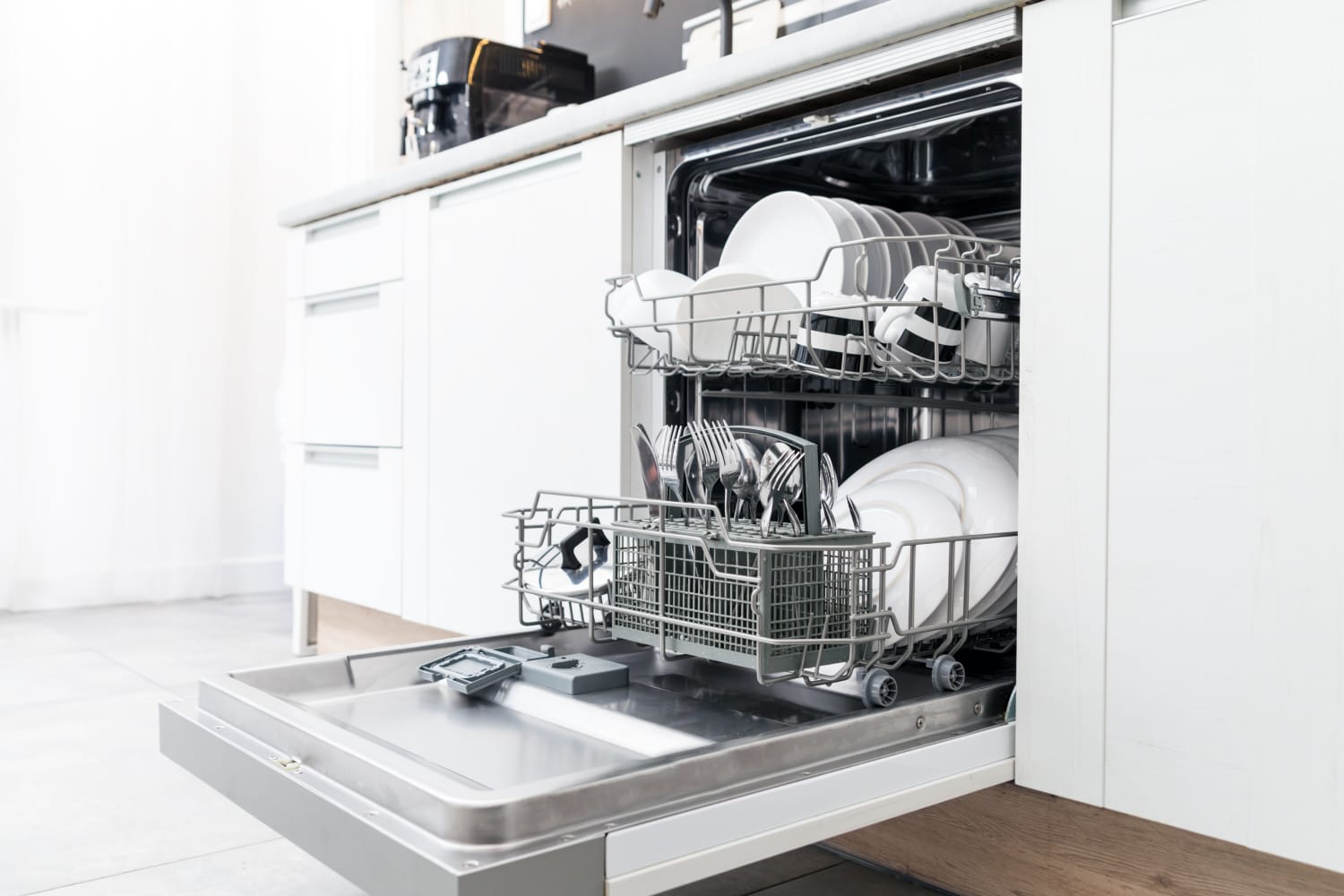
I thought I knew all my dishwasher usage rules: Run it when it’s full, but don’t overload it. Scrape the plates, but don’t rinse them. Never use it for wood or cast iron cookware. So imagine my surprise when I found out via Apartment Therapy that there’s a new (or at least new to me) rule to add to the list: Never run the dishwasher when it’s raining.
No, it’s not Mother Nature’s way of telling you to take a break from housework, unfortunately. This rule supposedly applies to residents of towns with a shared sewer system. A quick web search told me that about 60% of New York City is on a combined sewer system, but without calling up the Department of Environmental Protection, I haven’t the faintest idea what this means for my home in Staten Island. And I know I’ve used the dishwasher when it’s been raining before. (I guess the one thing I have going for me is that I don’t ever remember the installation guy telling me or my husband to check the weather before using it.)
But I was curious: What happens if I forget to follow this rule, and run my dishwasher during a rainstorm? Here’s what I learned.
What Does the Weather Have to Do with Your Dishwasher?
“In cities like New York City that rely on combined sewer systems, heavy rain can overwhelm infrastructure by mixing stormwater and household wastewater into the same pipes,” says appliance expert Amy Chernoff, VP of marketing at AJ Madison. “When that system is under stress, using water-intensive appliances like dishwashers, washing machines, or even doing large loads of dishes by hand can add unnecessary strain, increasing the risk of backups and overflows.”
Now, backups and overflows are never fun words to hear when discussing appliances, let alone when sewer systems enter the chat. So I sought the advice of a local pro: Craig Risoli, who owns Mr. Appliance of Staten Island, a Neighborly company, as well as other Mr. Appliance locations throughout New Jersey and Pennsylvania.
“From an appliance service perspective, the concern isn’t the sewer system itself, but how drainage flow behaves during heavy rain,” says Risoli. “When stormwater increases resistance in downstream drainage, it can create backpressure in household drain lines.” For dishwashers and other water-driven appliances, this can lead to slow draining, standing water, or leaks at connection points. “Dishwashers are designed to move water in one direction, so any resistance downstream can cause issues even when the appliance itself is working properly,” he adds.
As of February 2026, about one-quarter of homes in the U.S. are on a combined sewer system, with most of them being in older homes and neighborhoods in the Northeast, Midwest, and Pacific Northwest regions.
Should You Stop Using All Water During a Rainstorm?
So, would it be better if we refrained from using any water at all during a storm? Not necessarily. “From what we see in the field, the biggest issues tend to involve appliances that discharge large volumes of water over a sustained cycle, like dishwashers and washing machines,” Risoli says. In other words, turning on the faucet, flushing a toilet, or other intermittent water usage wouldn’t be an issue.
“As appliance professionals, we typically advise homeowners to avoid running major water-using appliances during intense storms to reduce unnecessary stress on both the appliance and the home’s drainage system,” says Rispoli. It sure looks like I have a perfect excuse to slack off on household chores when there’s a storm in the forecast.
Because I’d like to keep my appliances around for as long as I can, that’s advice I’ll be heeding. And while I can likely confirm my house’s location on the sewer map using city resources, Risoli tells me it’s more about being aware of my home’s behavior during storms that should guide my actions.
“If a home has a history of slow drains, backups, or water intrusion during heavy rain, it’s wise to delay running appliances that rely on drainage regardless of sewer type,” Risoli says. “When in doubt, homeowners can consult local municipal maps or a plumbing professional, but appliance professionals often help identify early warning signs during service visits.”
