

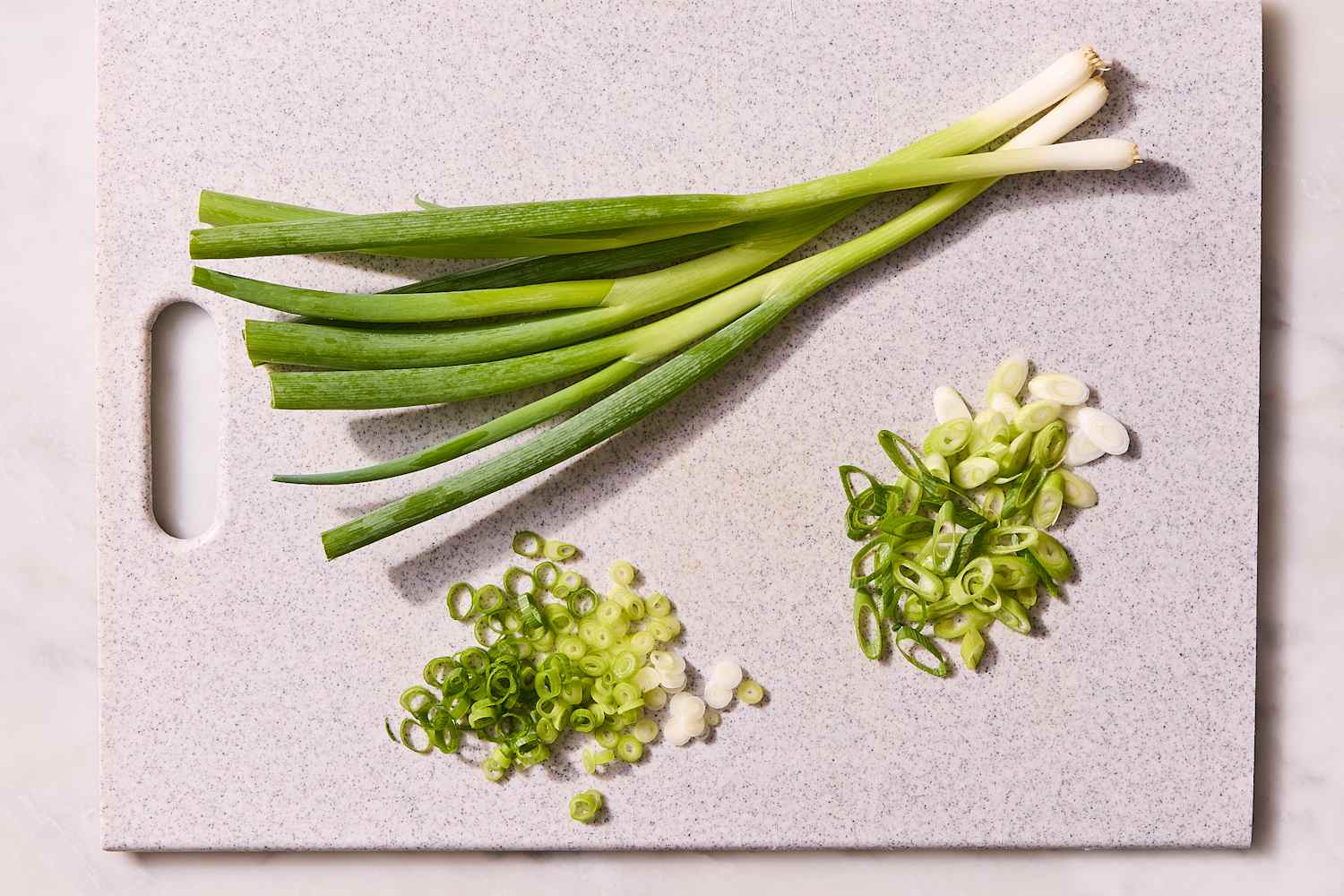
Green onions (also known as scallions!) will add a distinct flavor to any dish. If you’ve long wanted to get acquainted with this amazing allium but weren’t sure how to prepare them properly, we’re breaking down how to wash, cut, store, and enjoy green onions (spoiler alert: You CAN eat both the green and white parts of the plant!).
When shopping for green onions, it’s important to first make sure that you’re buying the correct produce. Here’s how to tell the difference between chives, green onions, and spring onions. While chives, spring onions, and green onions all have long, green cylindrical stems, there are a few significant aesthetic and taste differences. Chives have thinner stems and boast a more delicate flavor profile; meanwhile, green onions have thicker stems, a small white bulb at the bottom of the plant, and a stronger taste. Spring onions have thick stems similar to green onions but contain a larger white bulb at the bottom of the plant and have an even-stronger “onion” taste.
Once you’ve zeroed in on your green onions, check for freshness: The stems should be bright green with a firm texture. Avoid bunches that are soft, wilted, and slimy.
Cross-cut rings are the most common way to cut green onions — here’s how to prepare them:
Bias-cut green onions make for an aesthetically pleasing garnish to any dish — here’s how to prepare them:
How to Store Green Onions
If you’ve already sliced your onions, it’s best to use them immediately — but if you need to stow your sliced produce, you can store it in an airtight container in the fridge for up to two days.
