

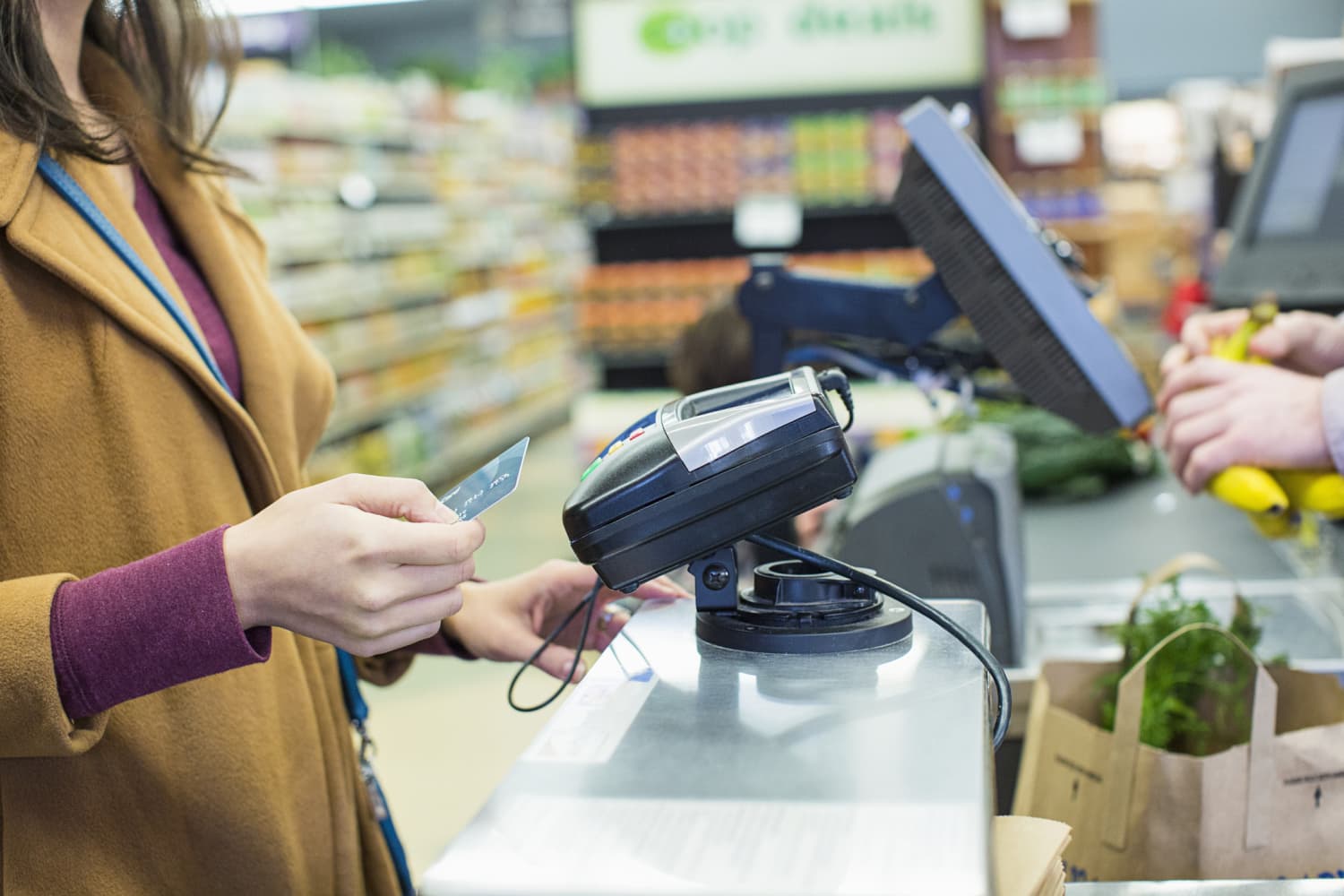
Grocery prices have been on the rise for a while, and if you’re anything like me you’ve been feeling the impact at the cash register. Despite trying my best to budget, use coupons, and buy items on sale, I keep finding that groceries nowadays are so expensive. Just a modest bag of a few pantry staples can cost upwards of $50 or more.
Unfortunately, it seems like we won’t be seeing relief anytime soon. As tensions arose in the Middle East and scaled into a full-blown war with Iran, ships were halted in the Strait of Hormuz (the passage between the Gulf of Oman and the Persian Gulf). I wondered if this too would cause another spike in food prices in the United States, as it’s already impacting other countries (more on that below) and there’s no clear end in sight. So I did some research and spoke to experts in the field to learn exactly how the war is impacting food prices on the producer, farmer, and consumer level — and which items will see the biggest price hikes.
What Travels Through the Strait of Hormuz
Since the war started, the amount of ships coming through the Strait of Hormuz dropped by 97% — nearly completely halting the transportation of goods. According to Máximo Torero, chief economist of the Food and Agriculture Organization of the United Nations (FAO), “The ongoing disruption to the Strait of Hormuz trade corridor is triggering one of the most severe shocks to global commodity flows in recent years, with significant implications for food security, agricultural production, and global markets.”
Because we don’t rely on LPG, how it relates to food in the U.S. is a different story. Carolyn Dimitri, professor and director of the Food Studies graduate program at New York University, said, “According to a UN report on the Strait of Hormuz Disruptions, about 2% of the products traveling through the strait are bulk products, which includes grain. Fertilizers also travel through the strait.”
This has a resulting domino effect on any industries that rely on that fuel. When gas prices tend to rise, so do fertilizers. Fertilizer is an essential input for farmers, and without it the amount they’re able to grow and produce could dramatically shift. Dimitri notes that since “the amount of fertilizer shipped has declined, one response can be that farmers substitute for other kinds of fertilizer (which they should be able to do).” She also referenced this video, which further explains that fertilizer costs have been up anyway for over a year due to tariffs.
However, the FAO projects that global fertilizer prices could rise by 15-20% if the crisis persists. And if things continue on this path for more than three months, the FAO expects smaller yields for crops that are heavily reliant on fertilizer, such as wheat, rice, corn, and soybeans — many of which are also in high demand for feeding livestock (more on that below).
Impacts on the Farmer Level
If farmers are paying more to access essentials like fertilizer, is that extra cost then passed down to the consumer? Well, it depends. Erin Mittelstaedt, CEO at The FruitGuys, a California-based company that delivers farm-fresh produce and snacks to businesses, organizations, schools, and homes, said, “Fuel surcharges and fuel prices have gone up significantly in recent weeks, which increases the cost of delivery for our farm partners and for us.” However, their wholesale costs on fresh produce remain stable. She continues, “Our buyers haven’t seen an impact on freight prices for the bulk fruits and vegetables that we purchase, but we have seen freight prices steadily increase for snacks over the last six months.”
But the consumer isn’t feeling those impacts. “We’re largely absorbing those increases rather than passing them on to our customers because we believe the impact will be temporary. We did increase some of our shipping charges this year, but that was because of an annual price increase from one of our couriers, not specifically because of the Iran conflict.” This is also due in part to how The FruitGuys procure. “We source our produce as locally as possible, so the higher fuel prices haven’t had a significant impact on our business at this point,” she says.
Still, the farmers that they work with are definitely feeling it. Mittelstaedt shared, “One of the farmers we work with told us this week that high input costs are one of his biggest challenges, alongside weather disasters. When prices for fuel go up, that directly impacts farmers because it costs more for them to operate their equipment and transport their produce. It can also increase the cost of the materials they use, like fertilizer and packaging.”
So if it’s mainly fuel, then does the average consumer not have to worry about increased prices at the grocery store? Not exactly. Historically, food prices have followed suit when fuel prices are up, as highlighted in the UN report from above. Dimitri concurs: “Food prices and energy prices move together (rising oil prices means transportation costs go up). I would expect there to be a rise in all food prices, due to rising costs (transportation in particular). Food retailers and manufacturers are quick to raise prices when costs go up, and slow to drop them when costs decline.”
And climbed they have. According to the FAO, world food commodity prices rose in March for the second month in a row, citing the conflict in the Middle East as a driving factor. In addition, the FAO’s Food Price Index, which tracks changes on a monthly basis on international prices of a basket of globally traded food items, went up by 2.4% from February to March, and is 1% higher than it was last year.
The USDA also conducts a Consumer Price Index (CPI), which measures economy-wide inflation and provides an outlook on food prices, which increased 1% from February 2026 to March 2026. It’s also up 3.3% from March 2025. The USDA also found that food prices in March 2026 were 2.7% higher than those in March 2025, and predicted that prices for all food will increase by 2.9% in 2026.
Overall, it’s so much more than the actual food items themselves that are baked into the cost that you or I would pay. What the average person might not be considering are the transportation costs, feed for livestock, processing fees, and refrigeration. In fact, according to the Independent Grocers Alliance (IGA), fuel-related costs can make up 15-30% of the total cost of food. Furthermore, a sustained 10-15% increase in fuel prices can lead to a 2-4% increase in retail food prices. So if those numbers are up on all fronts, eventually they will trickle down and we’ll feel the impact on our wallets too.
Which Groceries Will Be Most Affected
So exactly which groceries will give shoppers the most sticker shock? I looked at more findings from the USDA’s price outlook to break it down. Overall, the USDA predicts that in 2026 prices for seven categories are expected to grow faster than they historically have on average for the past 20 years. Those are beef and veal, fish and seafood, fresh vegetables, processed fruits and vegetables, sugar and sweets, nonalcoholic beverages, and other foods.
Beef and veal prices were 12.1% higher in March 2026 than in March 2025, and are predicted to increase by 6.3%. Why so high for beef? IGA explains that the meat and dairy industry is most impacted by feed costs, refrigeration, and transportation. “Beef products in particular tend to feel fuel increases more strongly because energy is required not just to transport the product, but to grow feed, raise animals, and maintain a continuous cold chain. And that is before the product ever hits the refrigerated areas of a grocery store, which of course, adds in fuel costs yet again.”
Pork prices are predicted to increase by 0.4%, while poultry prices are predicted to increase 0.7%. (These may be the cuts of meat to opt for if you’re aiming to budget on meat costs. Plus, we’ve got recipe inspo if you need to think of more ways to cook with ground pork.)
Interestingly however, egg prices are predicted to decrease by 29.4%. Why? The USDA expects production to ramp up after last year’s bird flu outbreaks, which really took a toll on hens. Mike Hostetler, vice president of insights at the American Egg Board, explains, “Eggs remain one of the most affordable sources of high-quality, complete protein available, and they’re plentiful in stores nationwide. Like other agricultural commodities, egg prices are driven by supply and demand — and farmers are selling eggs at or below what it costs to produce them. While challenging for egg farmers, it’s a great time to buy eggs — especially for shoppers looking to stretch their grocery budgets.”
When it comes to fresh produce, the prices of fresh vegetables are predicted to increase 4.8%, while fresh fruits are predicted to increase 1.0%. Mittelstaedt explained that at The FruitGuys, they’re seeing some higher fruit prices overall (however, those increases started before the conflict). “If the conflict does impact pricing for fresh produce, I expect imported items to be the most affected because higher fuel costs will make transporting them more expensive.” I was curious if we’ll fully lose access to any produce due to these constraints, but Mittelstaedt wasn’t aware of any. “Most of our produce is either grown here in the U.S. or in Mexico, so it doesn’t flow through that region. Since fuel costs are the biggest concern right now, I anticipate prices will rise, but we’ll still have access to the same fresh produce items,” she said.
Finally, prices for sugar and sweets are predicted to increase by 8.1%, which include things like chocolate and candy. Nonalcoholic beverages, like soda, actually experienced a decline of 0.3% from February 2026 to March 2026, but were 4.7% higher in March 2026 than in March 2025. The USDA predicts that they’ll rise by 5.2% in 2026.
Potential Consumer Behavior Shifts
The true ramifications of this for shoppers, and their shopping habits, remains to be seen — but it’s likely that if you’ve already been trying to budget, you’ll have to continue doing so. You may have to shop smarter, more local, or even opt to go without certain items altogether if your budget doesn’t allow for them.
At The FruitGuys, so far Mittelstaedt says they haven’t seen a decline in sales, but she said, “I’ve heard from some of our produce partners that work with grocery stores that their sales there are down, at least in some areas of the country. That trend started prior to the Iran conflict, though, and it’s unclear what’s driving it. It may be inflation and general economic uncertainty.”
Similarly, Dimitri notes that “U.S. consumers are price sensitive, especially now given that food prices have risen so much since 2020. I expect people will substitute with lower-quality foods (give up steak, eat hamburger) and look for sale items or store brands. If they are able to do so, they might shop at lower-priced stores (like Aldi). And they may give up treats, like ice cream.”
If we are to see a resolution soon — negotiations have been underway for weeks (oftentimes at a stalemate) — it isn’t likely that prices will jump back down to what they were before. “I believe there will not be a speedy recovery, and that markets will take a while to adjust if/when there is a peace agreement. And then, a lot depends on how much control Iran maintains over the Strait (which is currently looking like they are going to hold control for a while),” Dimitri says. Only time will tell.
