

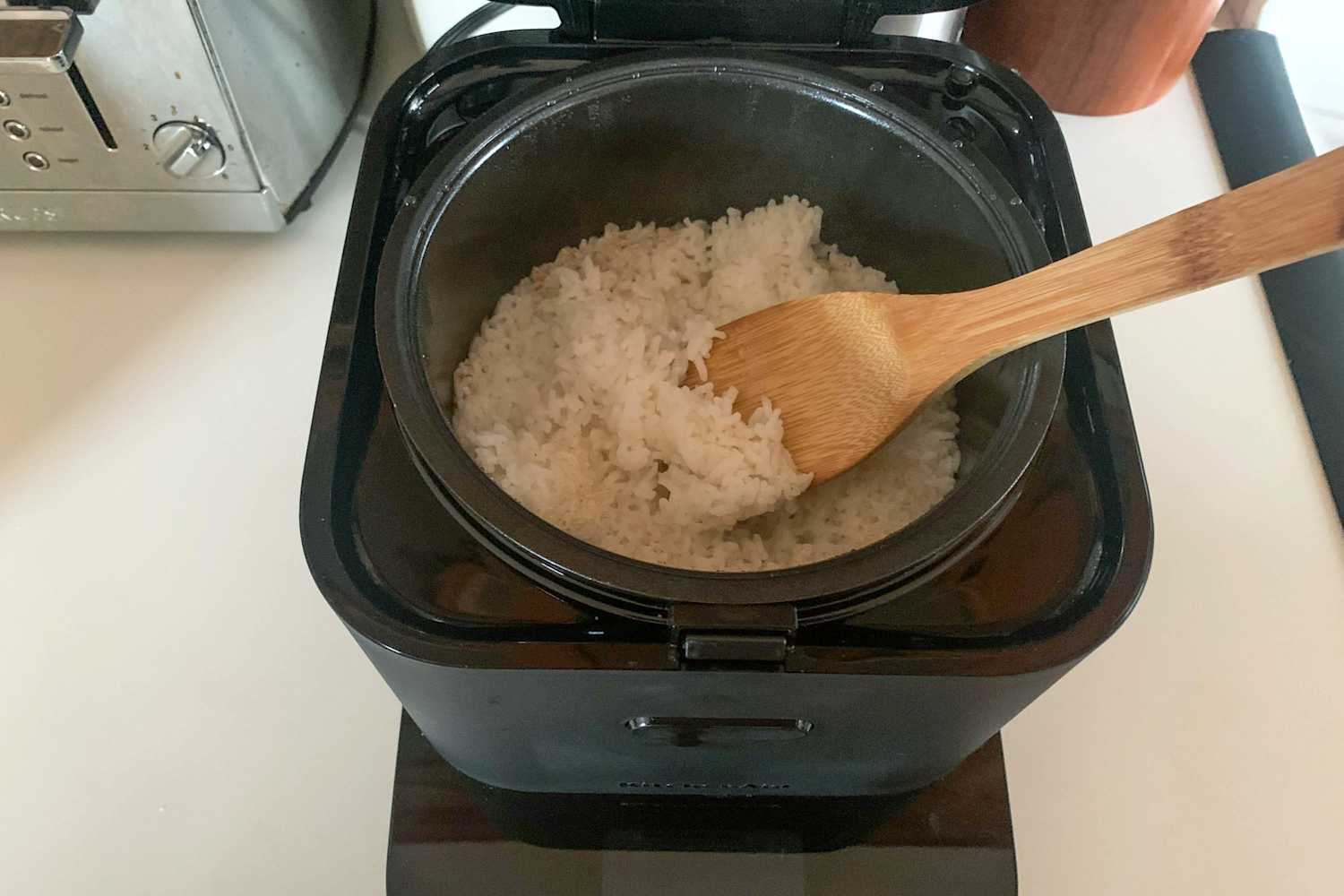
We eat a lot of rice at my house. Rice is either the star or a main component of several dishes per week. That said, I have very little interest in cooking rice on the stovetop like I did when I was a kid. It can be a fussy process that produces mixed results for even the most seasoned rice cook (me).
Once I was introduced to the magic of the rice cooker, I never looked back. I’ve had the same one for years, and it’s done an admirable job keeping up with my endless rice appetite. However, I recently had the chance to test out the new compact rice and grain cooker from KitchenAid — and I’m a total convert.
In addition to being a seasoned food editor who has been working in professional kitchens for almost 15 years, I am a home cook who uses a rice cooker multiple times per week. I have a lot of experience cooking rice in different cookers and on the stovetop, so I know what makes a good batch. I have also been testing and reviewing kitchen equipment and tools professionally for years.
What’s the Deal with the KitchenAid Compact Grain and Rice Cooker?
The KitchenAid Compact Grain and Rice Cooker can cook rice, grains, and dried beans without guesswork. It has a built-in scale that measures the weight of the food and ensures the right amount of liquid is added to the machine. The machines’ touchscreen tracks how much liquid you’ve added automatically, so there’s no need for a measuring cup.
It has 16 presets for grains, multiple types of rice, and several varieties of beans in addition to the option to add (and save) custom presets, making it easy to cook everything from a batch of white rice to farro, oats, lentils, kidney beans, and everything in between. It also includes a steamer basket that can be used to cook vegetables or proteins simultaneously with rice, grains, or beans.
My Honest Review of the KitchenAid Compact Grain and Rice Cooker
First of all, I think it’s important to establish that I am obsessed with this machine. As someone who cooks rice multiple times per week, this thoughtfully designed machine is a step up from a more standard model (and it looks smart on my countertop, to boot). However, as a person who also cooks a lot of beans, it’s an absolute game changer.
The liquid-to-grain ratios for rice are very specific. There have been many times that I find myself left with a non-conforming amount of rice at the end of the bag and being unwilling to embark upon the math required to figure out the correct percentage of liquid to add to account for it without throwing off the whole batch. It’s an annoyance I no longer have to deal with.
The KitchenAid cooker relies on a built-in scale to tell you exactly how much liquid to add based on the weight of the rice — so you can add any amount and still get a perfect batch, with no math or manual reading required. It also has settings for how firm or soft you’d like the rice to turn out, and crucially those settings are part of the “workflow” of preparing the rice. The display leads you through first weighing the rice, then confirming details like whether or not it was rinsed, the desired final texture, and liquid you’re using to cook the rice. The final step is adding the liquid, which involves a helpful visualization of a bar filling in as you go and even warns you to slow down as you get close to the target.
All of that is a significant step up from my last rice cooker. The beans, though, are what take this from “this is great” to “I can’t live without this ever again” for me. Dried beans are pretty well agreed upon to be superior to canned beans in all ways — save for convenience, where they are outstripped by orders of magnitude by their tinned counterparts.
Making dried beans is kind of a production. While technically you can cook them straight from the bag, to do them right you really need to soak them overnight. After which they still need to be cooked for a couple of hours to get them fully tender.
The benefit of cooking dried beans is that once properly cooked, they have a noticeably smoother texture than tinned beans. They’re almost buttery. You can also control the flavors and make beans that are truly spectacular — a tall order for tinned beans, which are often overly soft and sometimes even have a slight tinny flavor. All of that is to say, being able to cook dried beans straight from the bag, in just a couple of hours and completely hands-off, has fundamentally changed the way I cook and plan meals.
We eat a lot of beans in my house, but previously they had almost all been canned. I simply did not have the forethought most of the time to pre-soak beans. And when I did remember to, I tended to cook way too much, reasoning that if I was putting in all this effort I should make enough to make the work and time worth it.
No longer. Reader, I have shifted almost exclusively to cooking dried beans in the KitchenAid. It’s barely more planning than opening a tin, and I can add as much or as little as I like, because the built-in scale lets me know how much liquid I need for whatever amount of beans I’ve dumped into the machine. Settings for common types of beans (like pinto, black beans, and chickpeas) ensure the cook time will be correct.
A small complaint would be that I find the bean texture settings specifically to be a little off. There are three settings: firm, regular, and soft. The first time I tried cooking a batch of beans I selected “regular,” which seemed like the natural place to start, but the beans turned out very underdone. I’ve switched to “soft” every time since, though, and haven’t had an issue, no matter the type of bean I’m cooking. The texture setting for other grains I’ve cooked have all worked, yielding well-cooked results for white rice, brown rice, farro, pearled barley, and oats. I’ve experimented with creating my own custom presets as well, and was able to save a setting specifically for calrose rice that works every time.
That relatively small qualm, though, does not stop me from highly recommending the KitchenAid Compact Rice and Grain Cooker, which has totally re-vamped my weekly cooking routine for the better.
Buy: Kitchen Aid Compact Grain and Rice Cooker, $249.99 at KitchenAid
