

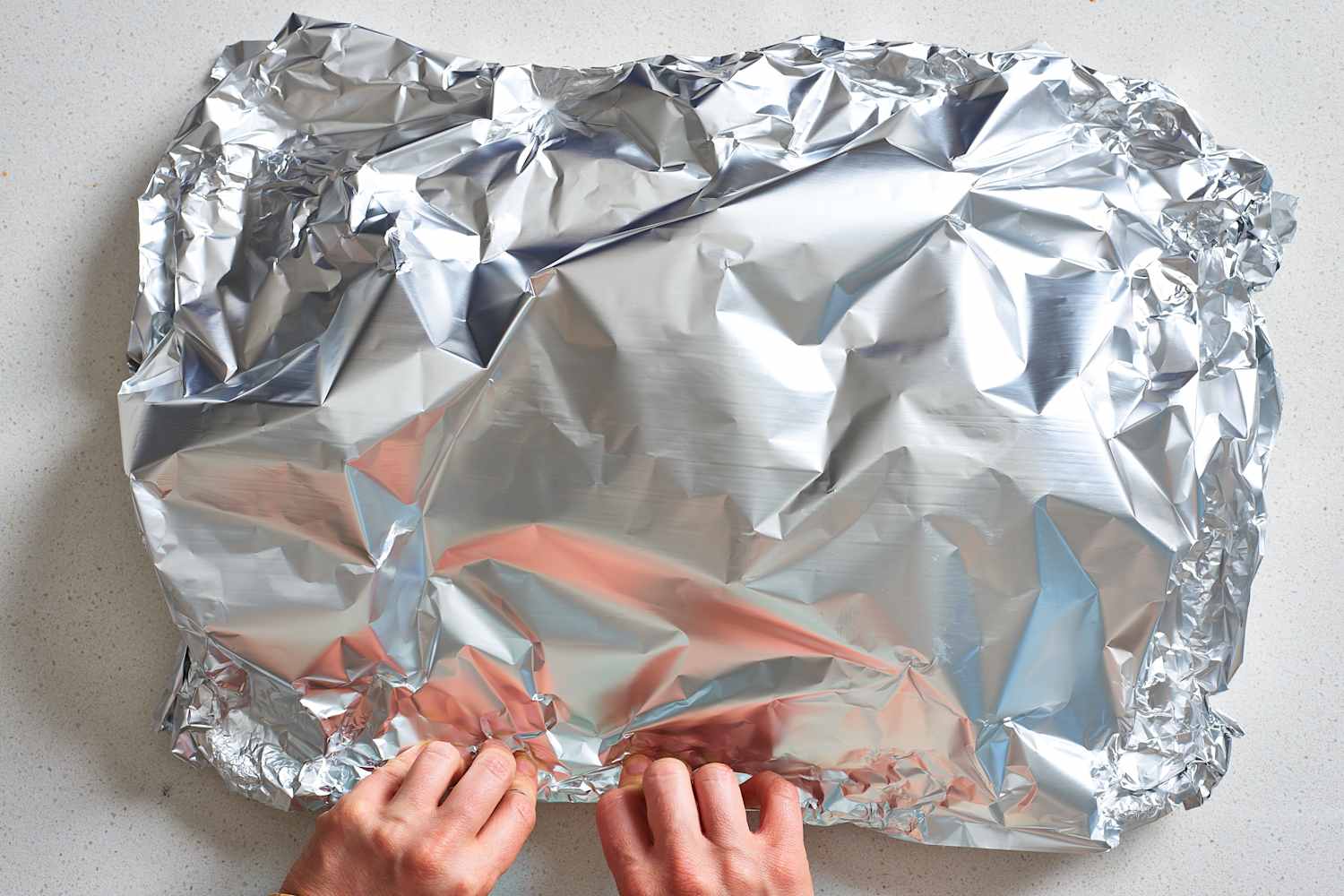
We’ve all had to deal with storing or packing away leftovers. Maybe you had to cover a plate for someone coming late to the cookout, or you’ve been left with half of an uncut watermelon you wanted to keep fresh. Whatever it is, you have to find a way to seal it and save it.
Recently, a few editors at The Kitchn have been grappling with what they should be wrapping their leftovers in. Many of us try to limit our plastic use, but does aluminum foil deliver the same seal? Or is it actually healthier for storing our leftovers? To find out if we should be wrapping our food in plastic wrap or aluminum foil, I spoke with James Rogers, the director of food safety at Consumer Reports, and he said it actually depends.
When to Use Plastic Wrap for Leftovers
Rogers has been with Consumer Reports for 10 years, and said they look at questions like this all the time. He said it actually depends on what you are storing because both materials have potential issues, and there are foods you shouldn’t store with them.
The one type of food you shouldn’t store with plastic wrap is fatty foods. He explained that chemicals from the plastic wrap can transfer from the wrap into your food — especially if that food is fatty. He said chemical leaching is also common if you heat your food in the plastic wrap, so be sure to avoid that.
He explained that there is oftentimes a difference between the plastic wrap used in commercial spaces and the one people use at home. Commercial wrap is normally made of a different type of plastic (polyvinyl chloride) and has additional additives called plasticizers (like phthalates or BPA), which studies show may lead to plenty of harmful effects. Luckily, most plastic wrap in homes does not contain these added chemicals and is made from polyethylene instead. He recommended checking the packaging for labels such as “BPA-free” or “phthalate-free” when shopping.
When to Use Aluminum Foil for Leftovers
While explaining the use of aluminum foil for storing leftovers, Rogers mentioned how many recent studies have found that chemicals in aluminum foil can make their way into your food. It is even more prevalent when food is heated up when touching aluminum. While you shouldn’t microwave aluminum, you may use it to reheat leftovers in the oven or even bake dishes in the first place. So, he wants people to be aware of this.
He also explained that there is a higher chance of chemicals getting into your food if you wrap acidic or salty foods in aluminum foil. Rogers said the acidity and saltiness of these foods cause a chemical reaction where aluminum apparently leaches out of the foil. This reaction can also cause your food to taste or look different, according to Rogers. He listed tomatoes, citrus, and marinades as examples of foods that would fall into this category.
What Else to Consider for Leftover Storage
Because there is a chance chemicals can leach from plastic wrap and aluminum foil, it is important to try to limit the amount of time your food is stored in them, Rogers said. He also recommends limiting the amount of contact the food has with the wrap. For example, if you could wrap the top of a dish without having it touch your food, that would be preferred.
To recap, fatty foods are better stored in aluminum foil, and acidic or salty foods are better stored in plastic wrap.
If Rogers had to pick plastic wrap or aluminum foil, he would personally choose plastic wrap (as long as the food is not fatty). But if he could opt for a third option, he would actually prefer a glass container; they are safe to reheat and don’t pose as high a risk for chemical leaching.
