

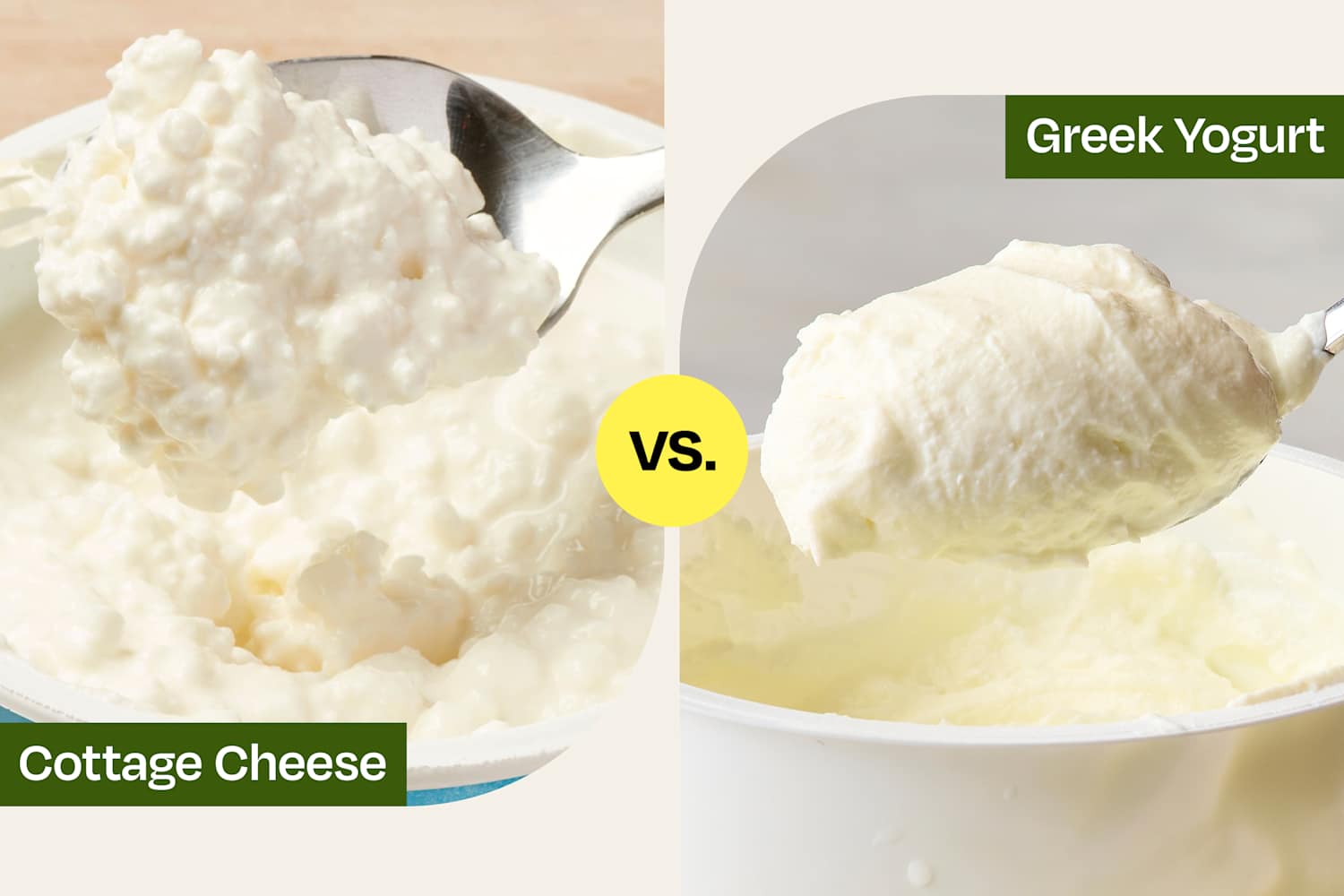
If you visited a grocery store at least once in 2025, then you likely noticed that protein has become the It Girl — dare I say it, the Labubu! — of macronutrients. It’s been added to practically everything: frozen waffles, popcorn, bottles of water, and even soda. What if you’re more of a straight-to-the-source kind of protein enthusiast, though?
Greek yogurt and cottage cheese are the favorite choices of many a dietitian, and their popularity amongst the “proteinmaxxers” (or those of us just trying to get enough protein) proves they’re more than just a passing trend. But which one packs the bigger protein punch? I chatted with three registered dietitians and doctors across the country to find out. Plus, I learned about a few ingredients to watch out for.
Greek Yogurt vs. Cottage Cheese: Protein
Although both feature milk and all-important cultures, Greek yogurt and cottage cheese each have their own unique flavor profiles, benefits, and uses. As to who is the winner of the protein crown, you’ll first have to consider the never-ending expansive variations between serving sizes and brands. The short answer is that it really depends!
Per ounce, cottage cheese has the slightest edge in the protein count, according to Kristen Carli, MS, RD, who is a dietitian at WOWMD. If you’re talking about serving sizes, according to Dr. Meena Malhotra, a double board-certified physician in Internal Medicine and Obesity Medicine, and the founder of Heal n Cure Medical Wellness Center, Greek yogurt packs in more (the suggested serving size is larger).
The protein varies across brands, too, so be sure to check the labels. To get a general range, I scoped out the protein content in popular cottage cheese and Greek yogurt containers (including Aldi’s store brand). Here’s how the numbers shook out.
Think about how much (or little) you’d typically eat, too. A whole cup of Greek yogurt in your smoothie will go down way differently than a few dollops of cottage cheese with some melon. Overall, Malhotra says, “the best choice depends on digestion, ingredient quality, and how someone plans to use it.”
Greek Yogurt vs. Cottage Cheese: Ingredient Lists
Short and simple is best when it comes to ingredients, according to all three of the dietitians I chatted with. Ideally, no more than the basics like milk and live active cultures (for yogurt) and milk, cream, salt, and cultures (for cottage cheese).
Plain and lower-sugar yogurt varieties are best, explains Lindsey Schoenfeld, MS, RDN, who is a registered dietitian as well as a chef. “Milk naturally contains lactose, a natural sugar that comes with benefits like protein, vitamins, and minerals. It provides energy in a steady way. Added sugar is for sweetness, adding calories without added benefits.”
She adds a light, natural sweetness with fruit, honey, agave, or maple syrup, as well as spices like cinnamon. As for cottage cheese, Schoenfeld says one should be mindful of sodium levels, but also understand that the salt is nothing to be too worried about, as it’s key to adding all-important elements like texture and flavor.
The protein content of your cottage cheese will also shift depending on any fillers and additives, something that Dr. Malhotra looks out for (and avoids) when picking up a tub at the store. This is why protein content shouldn’t be the end-all, be-all determinant. “Don’t just pick a brand because it has the most protein,” says Schoenfeld. “That could mean added ingredients like milk protein concentrates or whey protein isolates, [which] can change the texture and taste.”
Greek Yogurt vs. Cottage Cheese: Price
As you might expect, prices and quality will vary wildly in the dairy aisle. I decided to observe the prices of both store brands and popular name brands at nationwide retailers (Aldi and Walmart, in this case) to see how they compare.
Generally, I found the store-brand cottage cheeses and Greek yogurts were nearly identically priced (like, really splitting hairs here) per ounce, while name brands had more variation. Overall, though, Greek yogurt was just the tiniest bit cheaper per ounce than cottage cheese.
Greek Yogurt vs. Cottage Cheese: Versatility
Both cottage cheese and Greek yogurt are culinary Swiss Army knives. Sweet or savory, there’s very little you can’t make with either dairy product. Dr. Malhotra often uses Greek yogurt in savory sauces, and cottage cheese as the ideal topper for sweeter breakfasts like cinnamon toast. Carli regularly starts her day with cottage cheese; sometimes it’s topped with fruit and granola, while other mornings it’s sprinkled with lemon pepper and salsa and eaten with chips.
“Greek yogurt is [my] smooth, dependable go-to,” says Schoenfeld, who often adds it to sauces, dressings, and marinades. “[I] also bake with it often for added moisture, structure, and protein,” she adds.
Cottage cheese has also earned some well-earned real estate in Schoenfeld’s fridge. “Similar to Greek yogurt, [cottage cheese] can be used in baked goods and blended into a creamy base for whipped spreads, making a good swap for ricotta when you want a lighter but still creamy texture.” (Try it in your next lasagna.) It does have some limits, as Schoenfeld has found. “Smoothies with cottage cheese? Hard pass. Not everything needs to be a smoothie ingredient, and that’s OK. Lesson learned.”
Do you prefer cottage cheese or Greek yogurt? Tell us about it in the comments below.
