
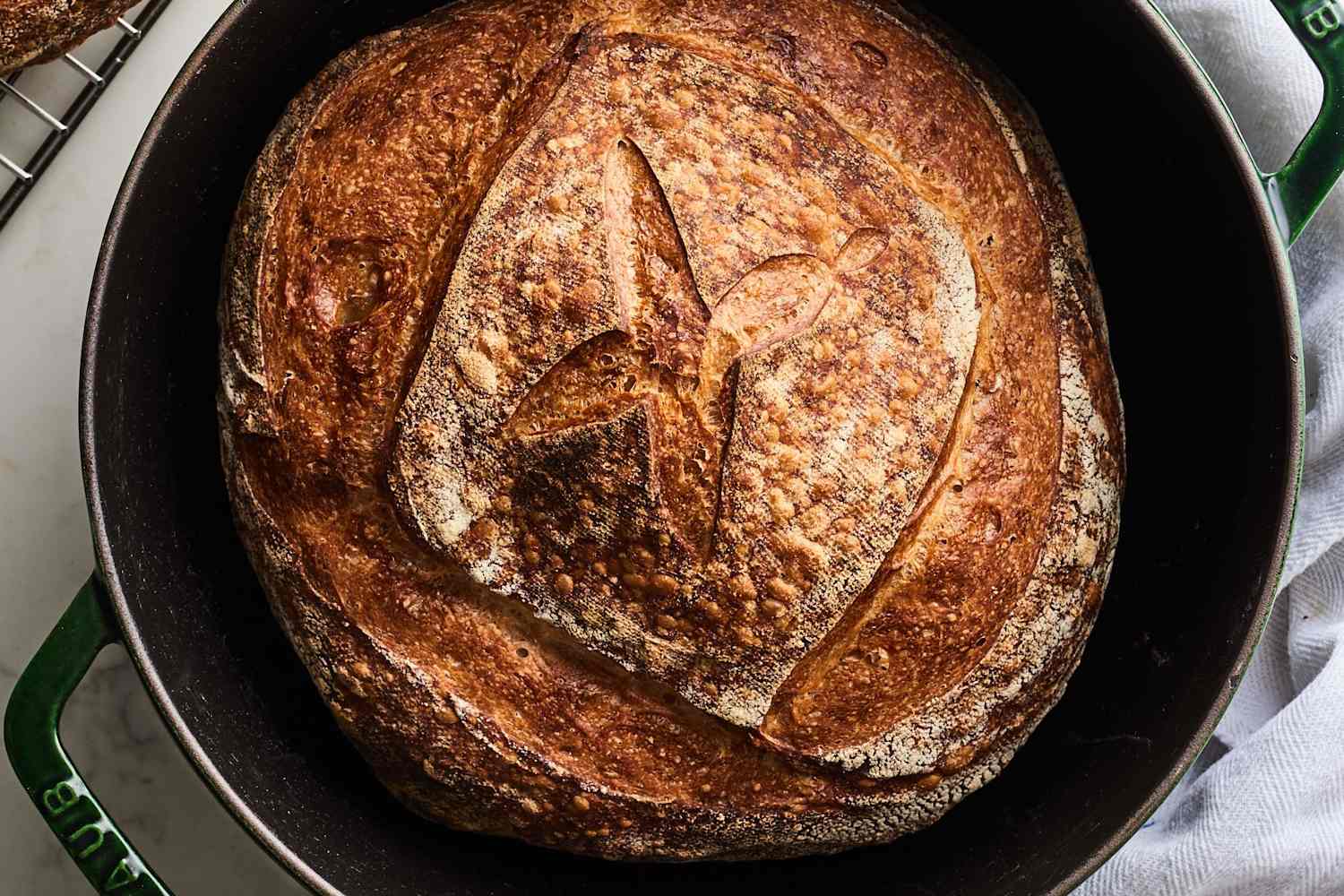
“Grandma hobbies” are taking over right now. Needlepointing, Mahjong, and homemade sourdough bread … again. Getting flashbacks to your pandemic hobby? Me too.
Today, #sourdough has amassed 1.2 million posts on TikTok alone. There are countless videos of users sharing their own baking tips and tricks, why sourdough is “better for you,” and how the hobby of tending to a sourdough starter has even felt therapeutic.
Taylor Swift is at the helm of the trend. After sharing her love of bread baking on Travis Kelce’s podcast, fans (myself included) have been keeping a close eye for “proof.” Like the loaves she’s gifted to her friends with handwritten puns, like “Are you bready for it?” “The loaf of a dough girl,” and “It’s a loaf story.”
In 2020, tending to a sourdough starter made sense; everyone was stuck at home, and people were bored. But why are people still obsessed with sourdough today? I reached out to two of my friends who picked up the hobby themselves within the past six months.
So, What’s the Deal with Making Your Own Sourdough Bread?
Both of my friends were influenced by social media. One of them, Kate, loves weaving a passion project like this into her everyday schedule. “It’s something fun to keep up with and think about beyond normal life, like work,” she said.
My other friend, Ann Michael, added that it also comes down to taste; her bread “tastes much more fresh and moist” than a slice from the store. Another perk: She gets to make fun flavor combinations, like jalapeño cheddar and brown sugar cinnamon. Kate loves experimenting with her sourdough starter, and has been adding it to things like cinnamon rolls, scones, bagels, and even tortillas.
Both of my friends received their starters from other people. It almost feels symbolic to me, how so many people’s starters — and, therefore, hobbies — can be so interconnected. Maybe it’s also about feeling like you’re a part of something.
What Nutritionists Say About Homemade Sourdough Bread
While neither of my friends got into bread making for health reasons, Ann Michael says she loves knowing all the ingredients that go into what she’s eating. Beyond that, though, there’s a lot of discourse, particularly on social media, about if sourdough is actually good for you. So I asked Lauren Manaker, a registered dietitian-nutritionist, to share her thoughts. According to Manaker, there are some real benefits to the craze.
For one, Manaker says that sourdough bread is easier to digest because it’s made through a fermentation process that uses wild yeast and lactic acid bacteria. She says that gluten and starches are broken down in this process, which makes it easier for our bodies to digest — especially for people with mild gluten sensitivities.
The lactic acid bacteria can also help your gut health, as it may have prebiotic properties. “While sourdough itself isn’t a probiotic (as the bacteria are killed during baking), it can still support a healthy gut microbiome — especially if you follow a diet rich in fermented foods,” Manaker says.
Another benefit that many may find important is that sourdough bread tends to have a lower glycemic index compared to regular bread. This means “it causes a slower, more gradual rise in blood sugar levels, which can be beneficial for people managing blood sugar levels or looking to avoid energy crashes.”
And beyond the health benefits of eating sourdough bread, Manaker says that a reason sourdough has become so popular is due to “the ritualistic and therapeutic nature of the process.” She says it’s a calming, mindful activity that gives people a way to “slow down, connect with tradition, and find some joy in creating.” Sounds like my friends, at least!
