

Lemon bars have always been my absolute favorite dessert. Long before I thought about technique or ratios, I was simply chasing that perfect bar. At one point, trying lemon bars wherever I could find them became a bit of a personal hobby. Bakeries, coffee shops, bake sales — if there was a lemon bar, I was ordering it and quietly cataloging what worked and what didn’t.
Personal preferences may vary when it comes to the ratio of filling to crust and the intensity of lemon flavor, but what remains universally true is that the perfect lemon bar strikes a balance between a tart, creamy filling and a sturdy, buttery shortbread crust — and it’s all finished with a dusting of powdered sugar.
To find the ultimate version, I turned to two icons: Ina Garten and Joanna Gaines. Ina’s baking style is all about reliable techniques that deliver consistent, foolproof results, while Joanna’s approach leans rustic, with a homespun, Southern-inspired sensibility.
Both recipes follow the same basic formula: A homemade shortbread crust is baked, topped with a lemon filling, and returned to the oven to finish. Small shifts in technique and ingredient ratios, however, lead to two very different takes. Both are crowd-pleasing, but only one delivers that classic lemon bar experience. Here’s how each one went.
Meet Our Lemon Bar Contenders
Sometimes small choices can completely change a dessert. Both recipes rely on the same basic formula — a simple crust that’s baked first, followed by a whisked lemon filling poured over the top and baked again until set. Each is finished with a dusting of powdered sugar.
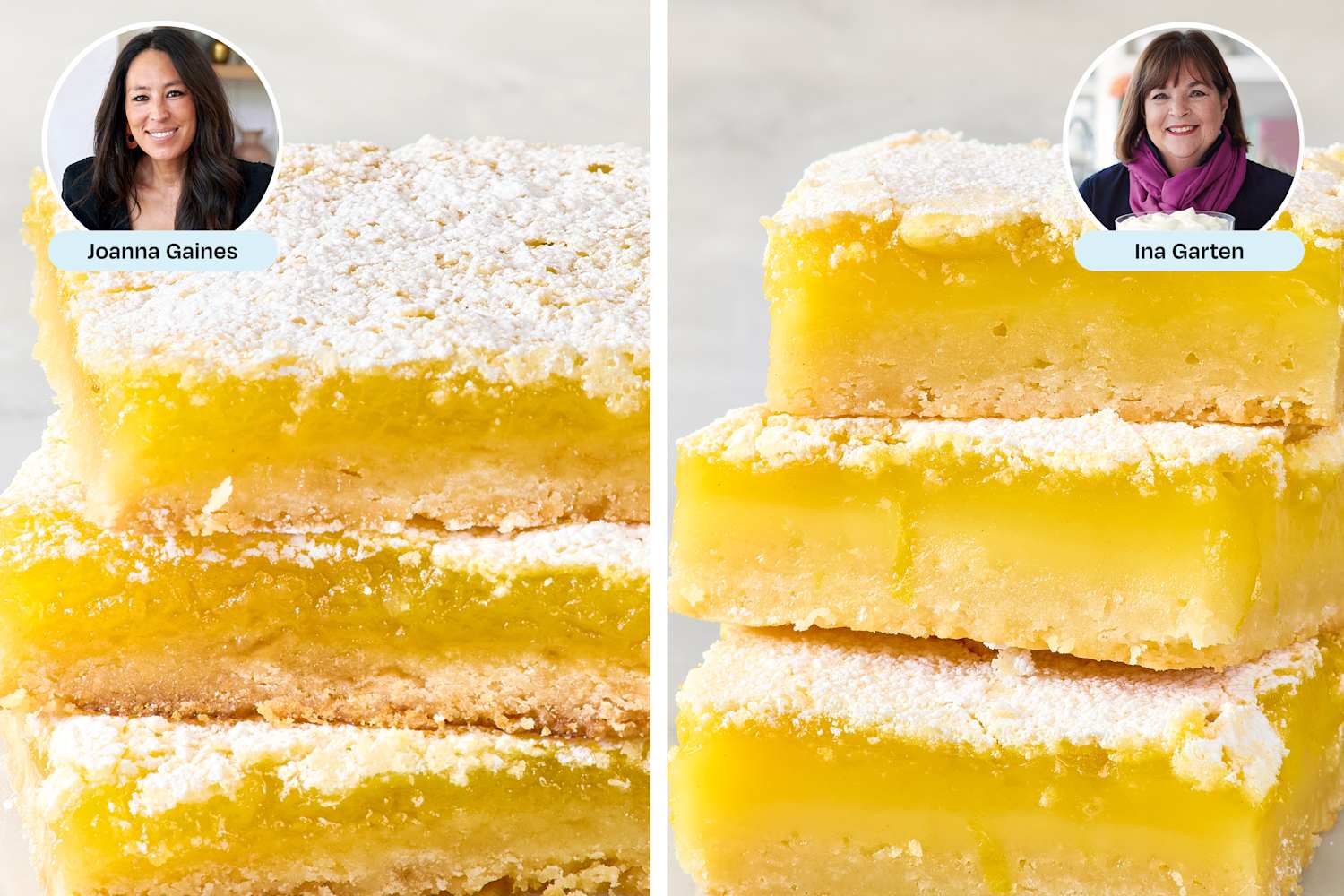
Ina Garten’s Lemon Bars. Ina Garten delivers a classic, bakery-style lemon bar with a thick, creamy filling and a structured shortbread crust that feels polished and complete. Her recipe follows a classic shortbread method — creaming butter and sugar before adding flour to create a sturdy, tender base that’s pressed into a metal baking pan and built slightly up the sides. Her filling is generous and structured, made with a higher ratio of eggs, sugar, and lemon juice, plus flour and lemon zest for stability and depth of flavor. The result is a thick, creamy layer that feels substantial and balanced.
Joanna Gaines’ Lemon Bars. Joanna Gaines offers a more rustic take, with a thinner filling and a flaky crust, resulting in a bar that leans more cookie-adjacent than bar-like. Joanna’s version keeps things simple by mixing melted butter with powdered sugar and flour to form a soft dough that’s pressed into just the bottom of a glass baking dish. The crust bakes up golden and crisp, despite looking wet going in. Her filling is more minimal than Ina’s — just eggs, sugar, and lemon juice — and by using less of each (plus the omission of flour), it results in a thinner, more delicate layer that delivers a bright, candy-like lemon flavor.
On paper, both Ina and Joanna’s crusts seem similar; they use the same ratio of ingredients. Both recipes bake in a 350°F oven, with a 20-minute par-bake for the crust followed by 30 minutes additional baking to set the filling. Each recipe relies on fresh lemon juice whisked into the filling and finishes with a classic dusting of powdered sugar.
How I Tested the Lemon Bar Recipes
Why You Should Trust Me as a Tester
I spent 15 years in professional test kitchens, including time at Martha Stewart Living and Food & Wine. Over the years, I’ve baked hundreds of desserts to exacting standards, so I know how even small shifts in ingredients or technique can change the outcome of a dessert. For this test, I carefully selected a group of tasters with varied culinary experience to broaden the perspective and ensure the feedback reflected a range of preferences.
Ina Garten’s Lemon Bars
Ina’s recipe starts by creaming room-temperature butter and granulated sugar to make the crust, then mixing in the flour and salt. This traditional method is a departure from Joanna’s recipe, which uses melted butter. The dough is pressed into a greased metal 9-by-13-inch baking pan, with a 1/2-inch rise up the sides to form a defined edge, then par-baked for 20 minutes.
While the crust bakes, Ina prepares the filling by whisking together six extra-large eggs, three cups of granulated sugar, and a full cup of fresh lemon juice (nearly triple the amount used in Joanna’s recipe). To support that high volume of liquid, she adds one cup of flour for structure, along with fresh lemon zest for extra brightness. The filling is poured over the cooled crust and baked for about 30 minutes more, until set. Once fully cooled, the bars are finished with a generous dusting of powdered sugar.
The results: This is a substantial, decadent bar. The filling is lemony, creamy, generous, and well-balanced, and it holds its shape beautifully when sliced. The crust is buttery and tender with a classic “short” texture, providing a sturdy foundation for the bright lemon layer.
What I loved: The flavor is bold and bright. The addition of lemon zest gives it a more complex, rich citrus flavor than Joanna’s version. The bars look especially elegant when cut into triangles, although you could easily opt for squares.
What I would tweak: Ina calls for a 9-by-13 inch-by-2-inch “baking sheet,” but you’ll need a true baking pan — with high walls — to get 2-inch sides. I’d also extend the crust bake time by a few minutes to develop a deeper golden color, before adding the filling.
Joanna Gaines’ Lemon Bars
Joanna’s crust comes together as a true “bowl and spoon” situation, stirring melted butter with all-purpose flour, powdered sugar, and salt just until a dough forms. It’s pressed into a greased glass baking dish in an even layer, kept flat across the bottom rather than built up the sides. The crust bakes at 350°F for 20 minutes, just until the edges are lightly golden.
Her method continues to favor ease and approachability with the filling. It’s a lighter, more delicate custard, made by whisking together large eggs, granulated sugar, and just 5 tablespoons of fresh lemon juice, which is significantly less juice than Ina’s version. There’s no flour here, so the structure relies entirely on the eggs. The filling is poured over the warm crust and baked for 30 minutes more. The bars are dusted with powdered sugar hot out of the oven.
The results: The golden crust contrasts beautifully with the gooey filling, which tastes almost like lemon candy. However, the ratio feels off. The filling is quite thin compared to the crust, and there simply isn’t enough of it to deliver that true lemon bar experience.
What I loved: The crust is more flavorful and golden than Ina’s and noticeably flakier, staying crisp longer. Using a glass dish is also a brilliant pro tip, ensuring the lemon filling never picks up a metallic tang. I was concerned that the powdered sugar would melt into the hot bars (as she doesn’t let them cool out of the oven) and disappear, but it stayed prominent. In fact, the tops developed a delicate, slightly crisp sugary layer that added a nice texture.
What I would tweak: The filling felt too skimpy — both when I was looking at it and when I was eating it. I couldn’t help but wonder if this might be the winner if Joanna had doubled the amount of filling and added in freshly grated lemon zest to really bring out the lemon flavor.
For a classic, bakery-standard lemon bar, Ina is the clear winner. All of my tasters selected her version as the top choice, noting that it hits every mark. Her bars are substantial in the best way; the filling is thick, creamy, and perfectly balanced by the punchy addition of fresh zest and a full cup of juice.
That said, Joanna’s version has a rustic charm that made it hard to put down. Two tasters (myself included!) kept reaching for “just one more” square instead of more of Ina’s bars. The crust bakes up beautifully golden with a crisp, flaky crunch. However, because there isn’t much filling it just didn’t feel like a lemon bar compared to Ina’s version.
Ina delivers the polished, “gold standard” lemon bar. But if you were to take Joanna’s superior, crispy crust and double her filling recipe, you would have a serious contender for the best lemon bar.
