

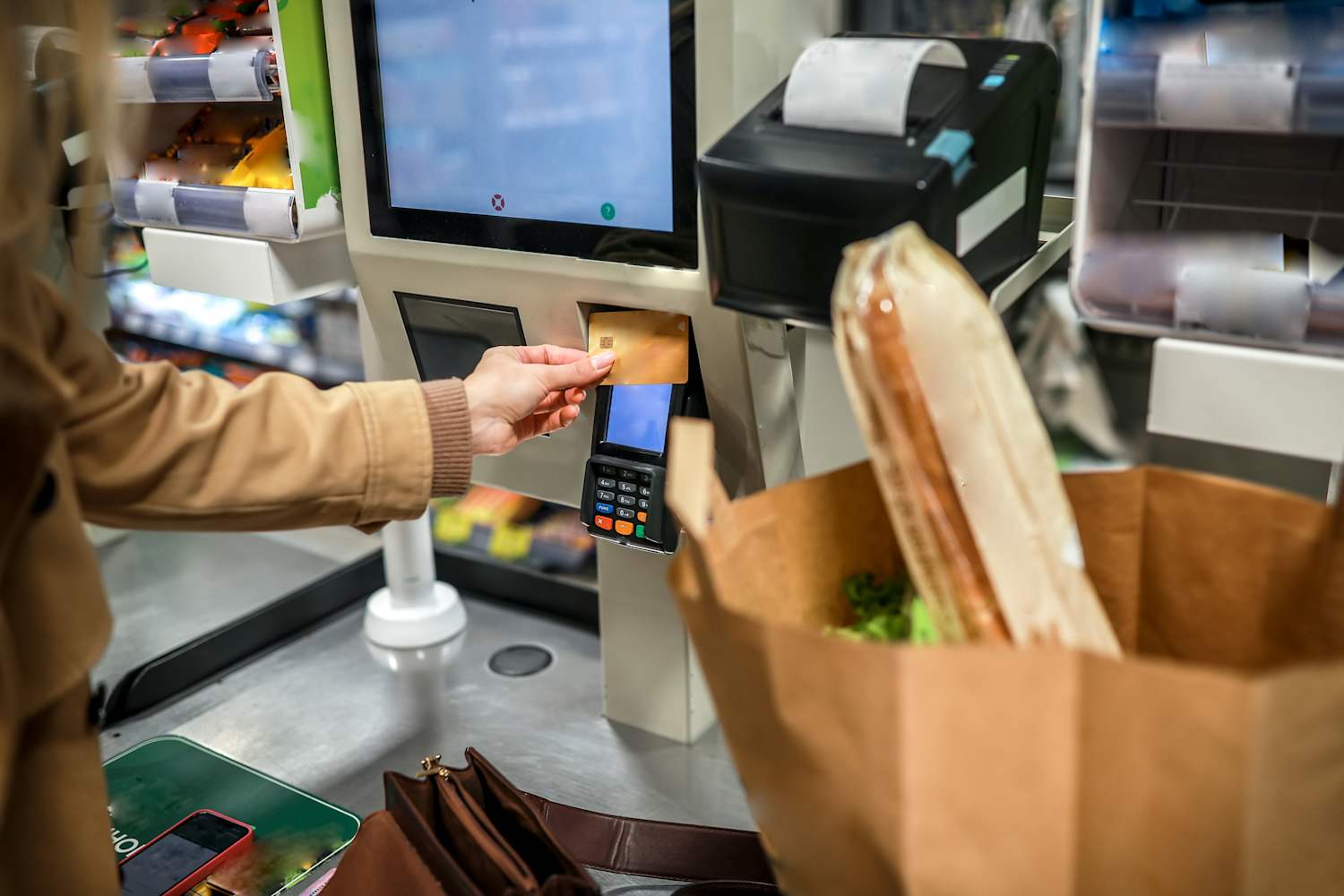
At the end of every trip to the grocery store, do you make your way to self-checkout or cashier lines? I head to self-checkout every time — no matter how many items are in my cart or how long the line is.
According to Capital One data, 86% of American consumers use self-checkout machines, and 43% prefer them over traditional staffed registers. Many of the self-checkout lines include fine print about the maximum number of items one can buy, which most shoppers have never really taken seriously. But that might change soon — because multiple states are proposing strict regulations on self-checkout lines to help prevent the occurrence of shoplifting.
The same Capital One study shared that 36.3 million Americans have stolen from a self-checkout kiosk, and almost 20 million plan to do it again. Apparently, it’s “easier” to steal from these kiosks; some theft occurs accidentally when items do not scan.
In an effort to crack down on this theft, California, Connecticut, Massachusetts, New York, Ohio, Rhode Island, and Washington have all proposed bills to enforce stricter regulations on self-checkout systems in grocery and convenience stores.
Back in March, a councilwoman in New York state proposed a bill to enact a strict 15-item limit for self-checkout with a $100 daily fine for noncompliance. Another aspect of the bill, and similar ones, is the ratio of workers to self-checkout kiosks. This New York bill would require one worker for every three self-checkout counters.
Feedback on New York’s proposal has been mixed. In a Reddit thread about the news, one user wrote, “Why does the government need to be involved with this? Stores can figure this out themselves.” Another person stated on another thread discussing the proposed bill, “I like self-checkout. It’s helpful. I don’t have to wait in line behind people just to get some sushi or some other small items.”
Rhode Island is also pushing back against the abundance of retail automation. A recent bill proposed in this state is attempting to cap the number of self-checkout items to eight, and have a staffing ratio of one worker to every two kiosks.
These movements to limit shoppers’ actions at self-checkout and increase the number of human workers certainly bring up certain implications for grocery chains. As with any business, grocery stores look where they can cut spending. Employing more workers instead of relying on technology (especially in this age of AI and automation) might seem like the opposite of progress to some.
