

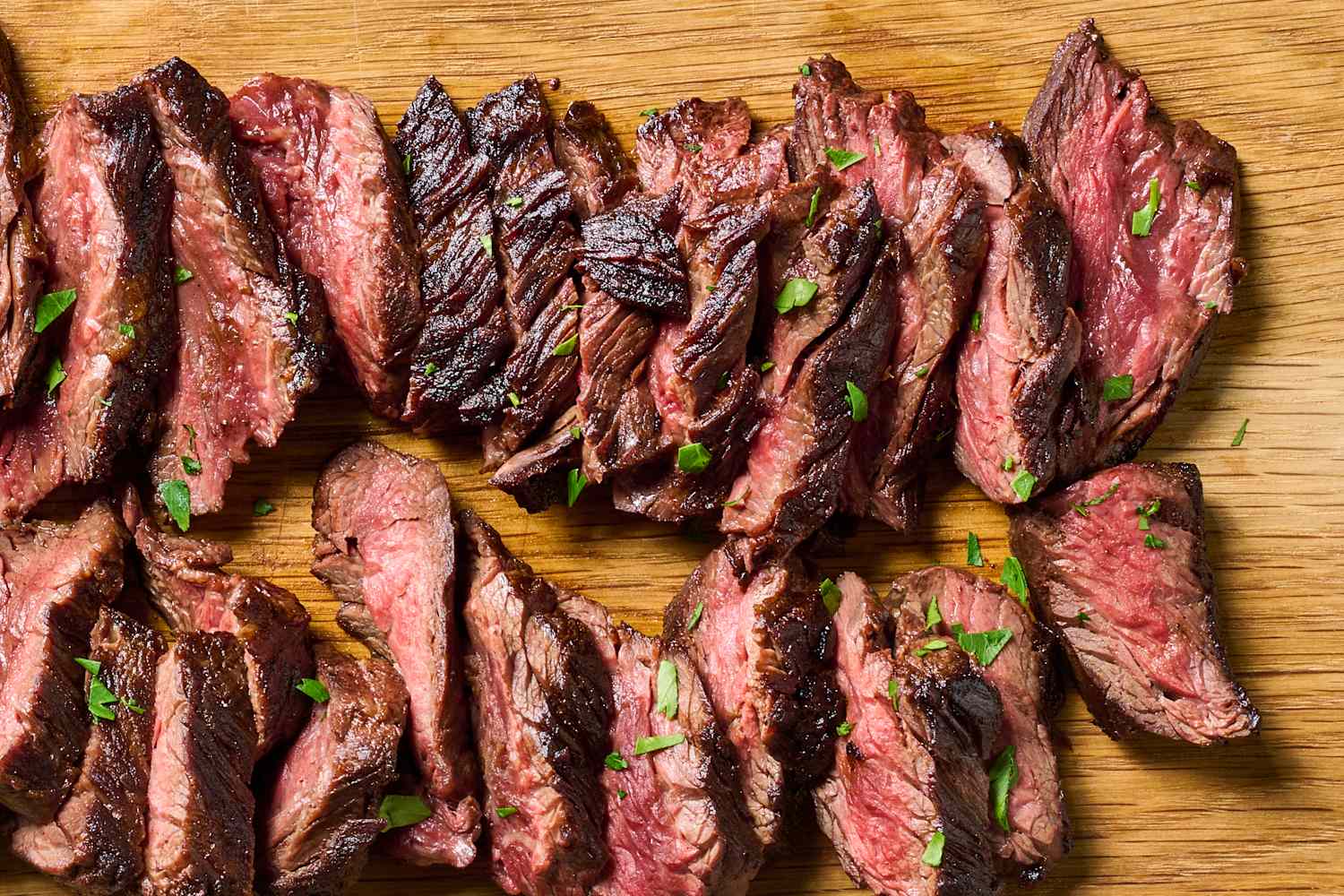
Whenever I was asked what my favorite food was when I was growing up, I would always eagerly respond, “steak!” It’s what I wanted for birthdays, graduations, achievements, and every family get-together. To this day I still love going to a fancy steak house, but I also wanted to know how to make a juicy, tender steak at home.
So I recently spoke with Victor Rivera, head chef at Bazaar Meat by José Andrés in New York City, to learn how to make restaurant-quality steak. At Bazaar Meat, the chefs use a special technique to make their steak so special: tempering. Here’s what tempering is, and how home cooks can replicate it in their own kitchens.
José Andrés’ Steak Tempering Trick
At Bazaar Meats, the restaurant’s steaks are hung about 3 feet above the open-fire grill to slowly warm up and begin cooking the meat. Rivera explains that the process is kind of like a sauna for the steaks, where the indirect heat helps to relax the muscles and proteins to make the meat more tender. He explained that this level of tenderness cannot be replicated by just taking the meat out of the fridge and letting it come to room temperature.
The steaks hang above the fire until they reach an internal temperature of about 105°F. Then, they are finished on the live flame to get that “beautiful crust.”
How to Temper Steak at Home
Of course, this restaurant trick requires you to have access to live fire, which is not always possible for the home cook. Luckily, Rivera shared his tips for re-creating the tempering magic with the use of a regular oven.
What Makes José Andrés’ Steak Tempering Trick So Good
The steak-cooking process at Bazaar Meats requires extra time and effort, but Rivera says it delivers “above-and-beyond quality.” For one, it eliminates the possibility of overcooking the steak and getting that gray ring that you may see at other restaurants.
Another benefit of the tempering technique is that it requires minimal resting of the meat after it comes off the grill. Rivera explained that with the tempering method, the steaks actually release moisture more slowly when they are heated up. Traditionally when you are cooking meat, moisture is pushed out of the meat when it is on the grill or in the oven. In that case, you need to allow the meat to rest to let the juices in the center move towards the outsides and reabsorb. But because that moisture was already released before the steaks hit the grill when tempering, you might not have to rest them as long for a juicy steak.
Rivera encourages people to use live fire when cooking. While it seems intimidating, he explains that the taste is so worth it. It delivers a wonderful crust that contrasts beautifully with the tenderness of the inside of your steak. But regardless of which way you ultimately cook your steak, try the tempering method out first for a perfectly cooked steak with a beautiful crust and a tender interior. You won’t regret it.
